
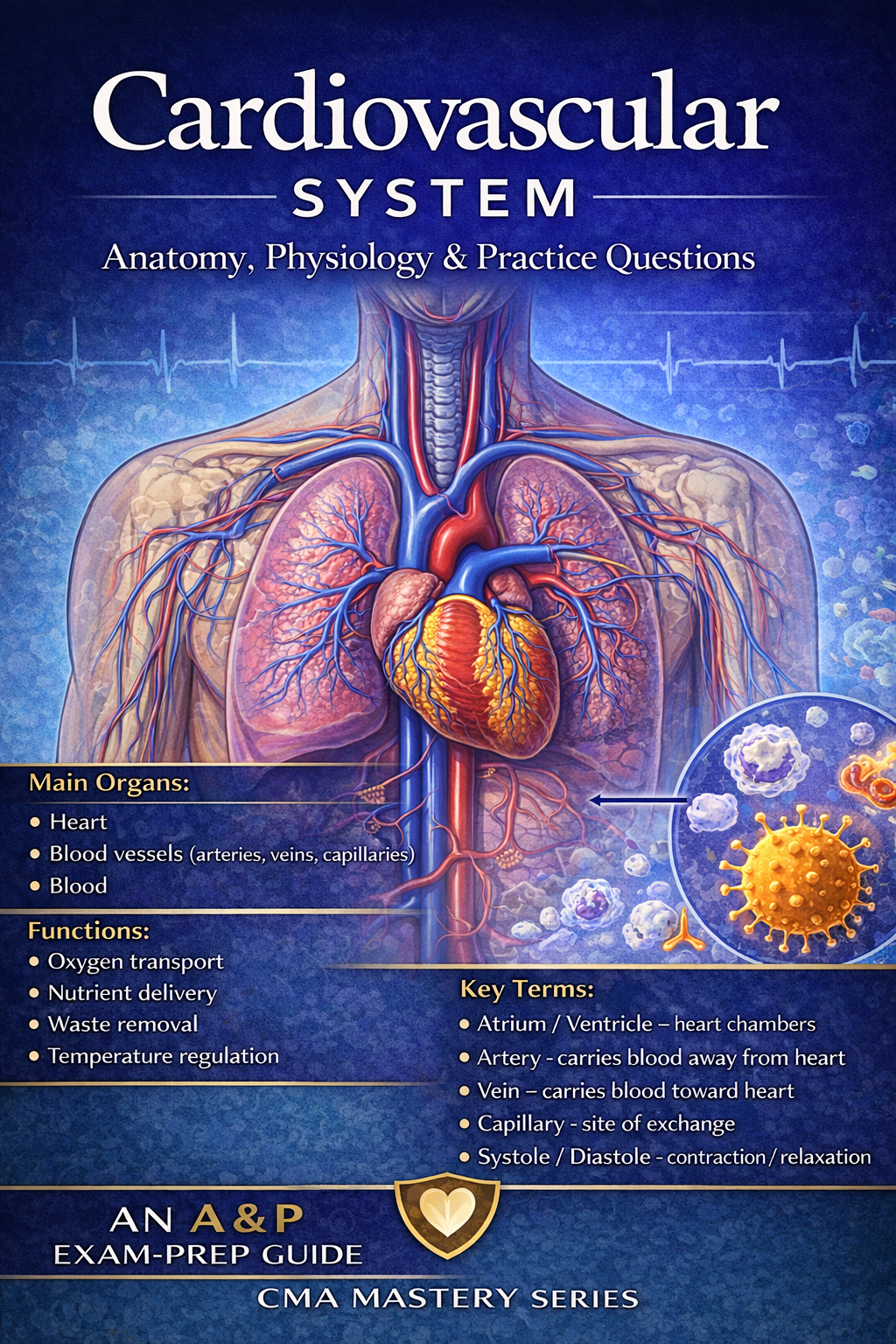
Cardiovascular System Digital Guide
Anatomy, Physiology & Practice Questions
$12.99$5.00
Boost your exam confidence with this comprehensive digital guide to the cardiovascular system. Covering anatomy, physiology, key functions, and essential terminology, this resource is perfect for CMA exam prep. Features include clear explanations, vivid diagrams, and detailed practice questions to help you master heart and blood vessel concepts quickly. Ideal for students and professionals seeking an effective study tool.
🫀 Primary Functions of the Cardiovascular System
The cardiovascular system is responsible for:
• Transporting oxygen and nutrients to cells
• Removing carbon dioxide and waste
• Regulating body temperature
• Maintaining blood pressure
• Supporting immune response
• Delivering hormones throughout the body
🧬 Major Components
Heart
• Pumps blood throughout the body
• Has four chambers:
Right atrium
Right ventricle
Left atrium
Left ventricle
Blood Vessels
• Arteries – carry blood away from the heart
• Veins – carry blood toward the heart
• Capillaries – allow gas and nutrient exchange
Blood
• Red blood cells (RBCs) – carry oxygen
• White blood cells (WBCs) – fight infection
• Platelets – help with clotting
• Plasma – liquid portion of blood
🔄 Blood Flow Pathway
Right atrium
Right ventricle
Lungs (oxygenation)
Left atrium
Left ventricle
Body tissues
📌 The left ventricle is the strongest chamber.
💓 Heartbeat Cycle
• Systole – heart contracts
• Diastole – the heart relaxes
Normal adult heart rate:
➡ 60–100 beats per minute
🩺 Vital Signs & Circulation
• Blood pressure measures arterial pressure
• Pulse reflects heart rate
• Oxygen saturation shows oxygen levels
• Capillary refill indicates circulation quality
Normal BP: 120/80 mmHg
⚠️ Common Cardiovascular Conditions
• Hypertension (high blood pressure)
• Hypotension (low blood pressure)
• Atherosclerosis
• Arrhythmia
• Myocardial infarction (heart attack)
• Stroke
🧪 Diagnostic Tests
• Blood pressure measurement
• Electrocardiogram (ECG/EKG)
• Pulse oximetry
• Cholesterol testing
• Cardiac enzymes
🧠 Exam Tips (CMA Focus)
✔ Arteries = away from the heart
✔ Veins = toward heart
✔ Left ventricle = strongest chamber
✔ Pulse taken at radial artery
✔ Blood pressure taken over the brachial artery
📘 Quick Memory Aid
“A-V Away”
➡ Arteries carry blood away from the heart
🩺 Clinical Reminder
Always:
• Verify patient identity
• Position patient correctly
• Use the correct cuff size
• Document findings immediately
💡 CMA Mastery Series Tip
Understanding circulation makes it easier to:
✔ Interpret vital signs
✔ Assist with EKGs
✔ Recognize emergencies
✔ Answer exam questions confidently