
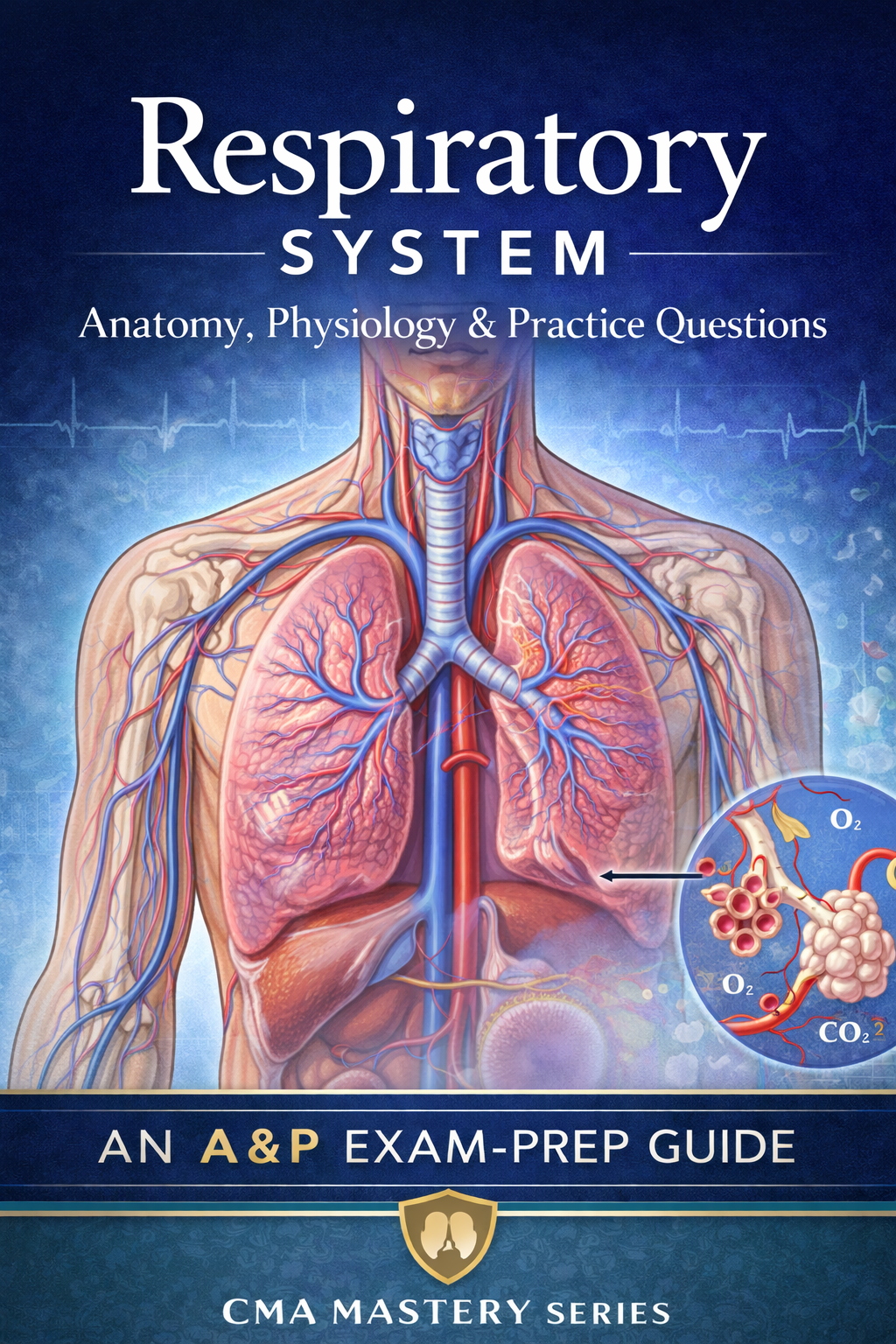
Respiratory System Digital Prep Guide
Anatomy, Physiology & Practice Questions
$12.99$5.00
Master the complexities of the human respiratory system with this comprehensive digital exam-prep guide. Featuring detailed anatomy and physiology explanations alongside targeted practice questions, this resource is designed for students preparing for A&P exams. Enhance your understanding and retention with high-quality illustrations and expertly crafted quizzes, all part of the acclaimed CMA Mastery Series.
The respiratory system allows the body to:
• Take in oxygen (O₂)
• Remove carbon dioxide (CO₂)
• Maintain acid–base balance
• Support speech and smell
• Supply oxygen to all body cells
🧬 Major Organs & Structures
Upper Respiratory Tract
• Nose / Nasal cavity – filters air
• Pharynx – air passageway
• Larynx – voice production
Lower Respiratory Tract
• Trachea – windpipe
• Bronchi – airways to lungs
• Bronchioles – smaller air passages
• Alveoli – gas exchange sacs
• Lungs – oxygenate blood
• Diaphragm – main breathing muscle
🔄 Breathing Process
Inhalation
• Diaphragm contracts
• Chest expands
• Oxygen enters lungs
Exhalation
• Diaphragm relaxes
• Lungs deflate
• Carbon dioxide exits the body
📌 Gas exchange occurs in the alveoli.
🩺 Key Respiratory Terms
• Dyspnea – difficulty breathing
• Apnea – absence of breathing
• Tachypnea – rapid breathing
• Hypoxia – low oxygen level
• Ventilation – movement of air
• Respiration – gas exchange
📊 Normal Respiratory Values
• Adult respiration rate: 12–20 breaths/min
• Oxygen saturation: 95–100%
• Pulse oximeter used to measure SpO₂
🧪 Common Diagnostic Tests
• Pulse oximetry
• Spirometry
• Chest X-ray
• Arterial blood gases (ABGs)
⚠️ Common Respiratory Conditions
• Asthma
• Bronchitis
• Pneumonia
• COPD
• Emphysema
• Tuberculosis
🧠 CMA Exam Tips
✔ High Fowler’s position improves breathing
✔ Oxygen is a medication—requires an order
✔ Count respirations discreetly
✔ Report shortness of breath immediately
✔ Cyanosis = lack of oxygen
🩺 Clinical Safety Reminders
• Always assess the airway first
• Monitor oxygen levels
• Keep oxygen away from flames
• Document respiratory findings promptly
📘 Quick Study Reminder
🫁 Oxygen in → Carbon dioxide out
🩺 Assess → Assist → Document